

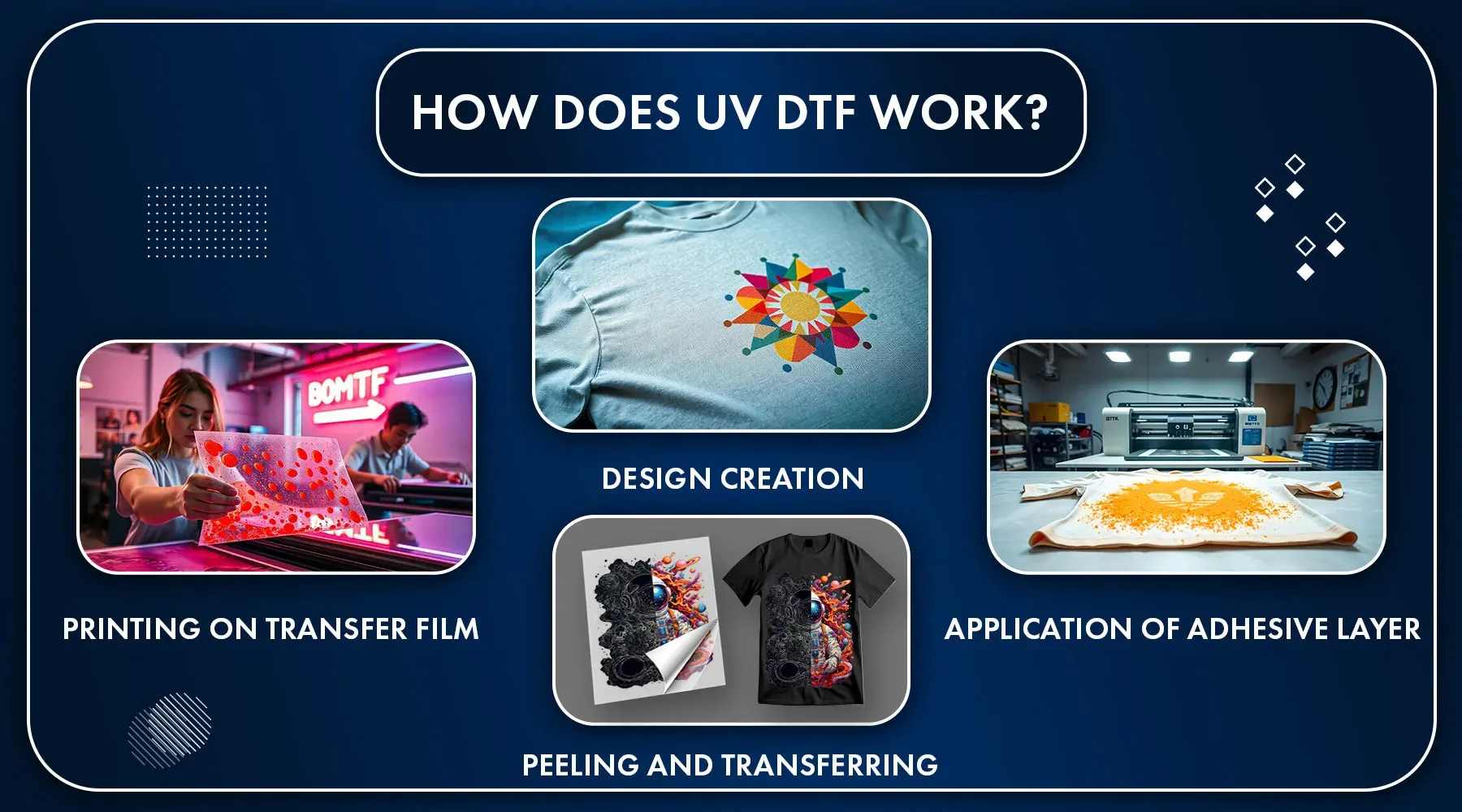
UV DTF Transfer is redefining how brands print vibrant designs on textiles and other substrates, offering sharp color, strong adhesion, and quick handling times that suit both small tests and larger runs. This comparison helps teams weigh color impact, throughput, substrate compatibility, and overall workflow implications, from setup to post-press finishing. For brands evaluating UV printing vs traditional DTF, key considerations include color vibrancy, edge sharpness, durability under repeated washes, and how the finish feels to the touch. Understanding potential hand-feel and wash performance across common fabrics—including cotton, blends, and synthetics—guides a confident, low-risk choice. Choosing the right method then aligns with product goals, production volume, budget, and long-term expectations for performance and brand consistency.
In the alternative framing, this technology is often described as UV-curable direct-to-film printing, using quick-curing inks on a film to transfer designs. Other terms you might see include UV-curable film transfer, direct-to-film with UV inks, and UV-accelerated print on synthetic substrates. This framing keeps the focus on color quality, durability, and workflow speed while aligning with search intent through related concepts.
UV DTF Transfer vs Traditional DTF: Color, Vibrancy, and Hand-feel
UV DTF transfer uses UV-curable inks that cure instantly under UV light, delivering bright, highly saturated colors and sharp edges. This leads to vivid visuals and a quick handling time that can boost production velocity, especially on synthetic and coated substrates where the ink bonds well with the surface chemistry. The result is a crisp, high-contrast appearance that can elevate brand impact on fashion accents, accessories, and decorative items.
Traditional DTF, by contrast, often achieves robust color depth and a softer hand-feel on many fabrics due to its adhesive powder and curing sequence. While color accuracy can be excellent, it may depend more on ink chemistry, film interaction, and post-transfer finishing. Hand-feel considerations matter for premium garments where fabric texture and comfort are key to consumer perception.
Substrate Diversity and Texture: How Each DTF Transfer Works Across Fabrics
UV DTF transfer tends to excel on synthetics and coated surfaces where UV inks cure quickly and bond strongly, producing durable prints with low moisture sensitivity and good edge definition. This makes it a strong fit for performance wear, accessories, and items where a glossy, note-worthy finish adds value.
Traditional DTF is widely compatible with a broad range of fabrics, including cotton blends and polyester blends, thanks to the adhesive powder and flexible transfer process. The texture of Traditional DTF prints is often more visible, offering a tactile feel that some brands prefer for certain textiles and apparel lines.
DTF Transfer Quality and Durability Across Wash Cycles
When evaluating DTF transfer quality, UV DTF’s immediate curing can contribute to excellent colorfastness and abrasion resistance on suitable substrates. However, the bond strength and feel can vary with fabric choice, so testing on target materials is essential to ensure performance under real-world wear.
Traditional DTF durability benefits from the well-established adhesion process of powder application and curing. This approach tends to provide reliable color retention and a balanced hand-feel across many fabrics, especially after repeated washes, provided post-processing and pressing conditions are optimized.
Throughput and Workflow: Speed, Efficiency, and Production Considerations
UV DTF offers rapid curing in certain setups, which can reduce drying time and streamline the workflow. This can translate to faster through-put for short runs or product drops where speed to market is a priority, particularly with compatible substrates.
Traditional DTF workflows involve powder application, curing, and transfer steps, which add stages but can be highly efficient at scale with established equipment and supplier ecosystems. For high-volume production, the broader supply chain and mature technology can offer predictable throughput and lower per-unit costs in many contexts.
Cost, Maintenance, and Total Cost of Ownership for DTF Methods
In UV DTF, ink costs and the upfront investment in UV curing equipment can be higher, but savings may come from faster turnovers and reduced post-processing. Brands should weigh total cost of ownership, including energy, maintenance, and equipment depreciation, against speed and output quality advantages.
Traditional DTF often benefits from a broader supplier base with established consumables and more widely available curing options. This can translate to lower initial costs and easier maintenance, though ongoing powder handling and curing steps should be factored into operating expenses and downtime.
Testing, Validation, and a Practical Decision Framework for UV DTF Transfer vs Traditional DTF
A practical approach combines pilot prints, color management, and a matrix of fabrics to compare edge sharpness, color accuracy, and hand-feel. Run wash tests and wear trials to quantify durability and ensure the chosen method meets brand standards for UV printing vs traditional DTF, and to assess long-term performance.
Develop a data-driven decision framework that considers product goals, fabric type, and sales channels. Include a total cost of ownership analysis, production throughput expectations, and a plan for continuous optimization to maximize DTF transfer quality, durability, and overall return on investment across your product line.
Frequently Asked Questions
What is UV DTF transfer and how does it differ from DTF transfer?
UV DTF transfer uses UV-curable inks printed onto a film and cured instantly with UV light, delivering quick handling and sharp color. Traditional DTF relies on water- or solvent-based inks with an adhesive powder and a heat transfer step. The result is often a broader substrate compatibility and a different hand-feel, making UV DTF transfer distinct from standard DTF transfer in process, durability, and finish.
How does UV printing vs traditional DTF affect color vibrancy and edge clarity?
In UV printing vs traditional DTF, UV DTF transfer typically yields brighter, highly saturated colors and crisper edges due to instant UV curing. Traditional DTF can deliver strong color depth but may show subtle differences in edge sharpness depending on ink chemistry and transfer parameters. Both can achieve high-quality results with proper calibration and color management.
Which fabrics are best suited for UV DTF transfer compared with DTF transfer quality on textiles?
UV DTF transfer excels on synthetics and coated surfaces where UV inks bond aggressively, while DTF transfer quality tends to be broad across fabrics, including cotton blends and poly blends, thanks to the adhesive powder workflow. Choose UV DTF for synthetic-heavy or glossy substrates and DTF when working with a wider fabric mix and a softer hand-feel.
How do durability and wash performance compare between UV DTF transfer and traditional DTF?
Both methods can be durable, but wash performance varies by substrate and post-processing. UV DTF transfer often provides strong colorfastness and abrasion resistance on compatible substrates, while traditional DTF benefits from a proven track record on everyday wear with reliable durability when properly cured and powder-adhesive is well-managed. Always validate with fabric-specific wash tests.
What are the key workflow, speed, and cost considerations when evaluating UV DTF transfer versus traditional DTF?
UV DTF transfer can offer faster through-put in certain setups due to rapid UV curing, but requires UV curing equipment which adds upfront cost and ongoing maintenance. Traditional DTF typically has a larger supplier ecosystem and established consumables, potentially reducing per-unit costs in established workflows. Consider total cost of ownership, throughput, and maintenance when choosing between UV DTF transfer and traditional DTF.
What testing steps should product teams perform to validate DTF transfer quality and DTF durability before mass production of UV DTF transfer?
Teams should run a color management and edge-clarity comparison, followed by wash, abrasion, and flex tests on representative fabrics. Create a matrix of fabrics, capture color accuracy (ICC profiles), test hand-feel differences, and monitor long-term durability. This validation helps determine if UV DTF transfer or traditional DTF best meets brand standards and product goals.
| Aspect | UV DTF Transfer | Traditional DTF |
|---|---|---|
| Definition | Direct-to-film process using UV-curable inks that cure instantly under UV light. Prints on printable film and transfers with heat and pressure. | Direct-to-film process using water-based or solvent-based inks with adhesive powder. Prints on film and transfers with heat and pressure. |
| Color & Vibrancy | Bright, highly saturated colors; crisp edges due to rapid UV cure. | Excellent color depth; depends on ink chemistry; color accuracy may vary; edges can be crisper or softer depending on process. |
| Hand-feel / Texture | Often thinner print layer; may feel lighter on fabrics. | Texture from powder and curing; hand-feel varies with parameters; can be more noticeable. |
| Substrate Compatibility | Great on synthetics and coated surfaces; bonds well. | Broad fabric compatibility including cotton blends; adhesive process supports many fabrics. |
| Durability & Wash | Strong colorfastness; quick cure; may feel stiffer on some fabrics. | Durable with proper curing; proven for apparel; long track record; wash performance reliable. |
| Production Speed / Workflow | Rapid curing; potential faster throughput; reduced drying time. | Powder application and curing steps; scalable with right equipment; longer workflow but established. |
| Cost & Maintenance | Higher ink and equipment cost; potential savings from faster turnarounds; maintenance varies. | Lower ink cost; mature supplier base; widely available curing options; maintenance standard. |
| Use-Case Scenarios | Vivid colors, quick cycles, glossy finishes; ideal for accessories and accents on synthetic substrates. | Large-scale textile applications; broad fabric compatibility; softer hand-feel preferred. |
| Decision Guidance | Choose UV DTF Transfer for fast time-to-market and bright visuals on suitable substrates. | Choose Traditional DTF for broad fabric compatibility and established, scalable workflows. |
| Quality Control & Testing | UV QC: color management, cure verification, edge sharpness. | Traditional QC: ensure powder adhesion, curing consistency, wash/abrasion tests. |
Summary
UV DTF Transfer offers a compelling option when brands need quick turnarounds and bright colors on synthetic and coated substrates. This Direct-to-Film process uses UV-curable inks that cure instantly under UV light, enabling faster handling and sharp color reproduction. It typically delivers high color vibrancy and crisp edges, with a thinner print layer that can feel lighter on some fabrics. Traditional DTF remains a versatile method with strong performance across a broad range of fabrics, thanks to the adhesive powder and curing process that provide reliable hand-feel and durability. When deciding, consider product type, volume, and end-use conditions: UV DTF Transfer for fast cycles and vivid visuals on suitable materials; Traditional DTF for broad fabric compatibility and a softer hand-feel. Plan pilots, implement color management, run wash tests, and evaluate total cost of ownership to determine which method best supports your brand goals. Both methods can deliver durable results when properly implemented, and the right choice enables scalable production and consistent quality across product lines.